
Rehabilitation decisions backed by objective movement data
Born from biomechanics research at Stanford University, Model Health delivers validated 3D movement analysis into everyday rehab. Results in minutes, ready for routine clinical use and return-to-activity decisions.
.webp)
Clinical decisions
grounded in data
Model Health adds objective movement measurement to your clinical workflow, complementing observation and professional expertise with repeatable, reliable data. Using only smartphones, you can track rehabilitation progress, personalize treatment plans, and support progression and discharge-readiness decisions, backed by objective movement evidence.
Track progression with
objective assessment
Until now, progress has been difficult to prove, leading to delayed discharge or premature return. Model Health facilitates inconsistent measurements across sessions and therapists, giving you instant, reliable and comparable insights every time. Tracking progress helps to demonstrate rehab progress to your patient, driving engagement and motivation
Tailor rehabilitation plan and
discharge-readiness decisions with evidence
Replace subjective assessments with objective movement data, supporting better rehabilitation plans and discharge-readiness decisions. Repeatable, consistent evaluations reduce reinjury risk and give clinicians greater confidence at every decision point.
Quantify movement quality,
not just task outcomes
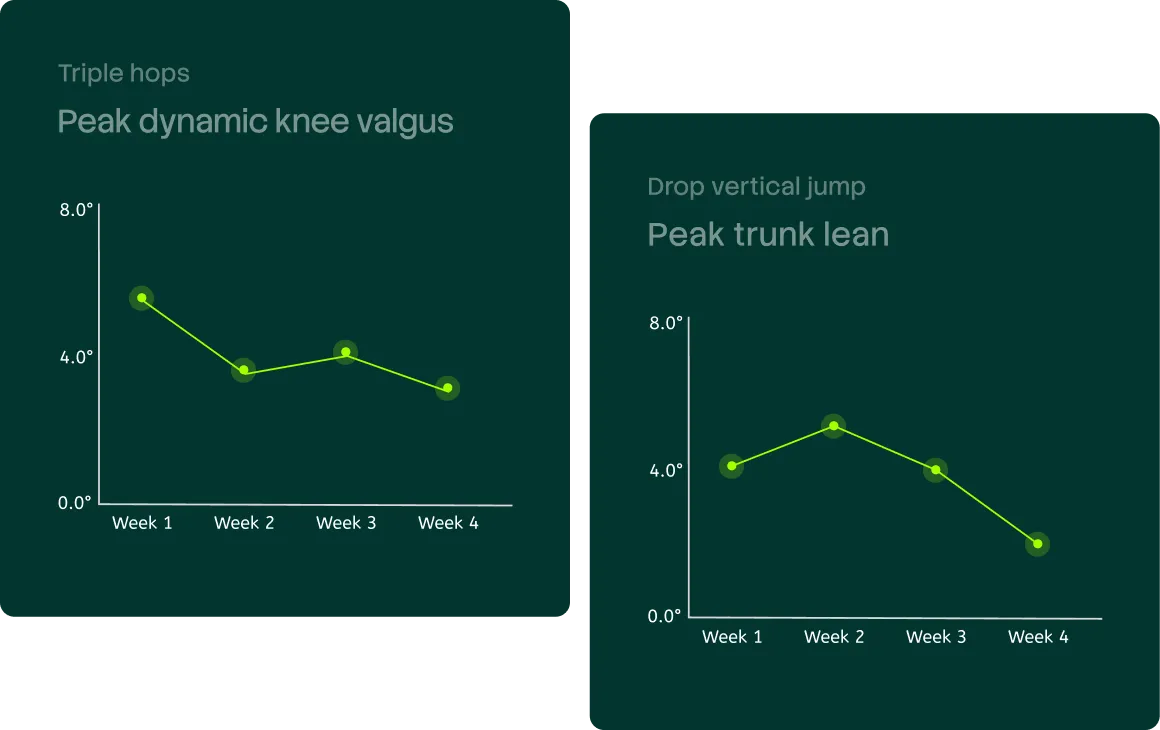
Jump height or hop distance don’t reveal compensation or coordination patterns. Model Health captures whole-body mechanics so interventions target the limiting movement quality, not only the symptom.

.webp)
Before Model Health
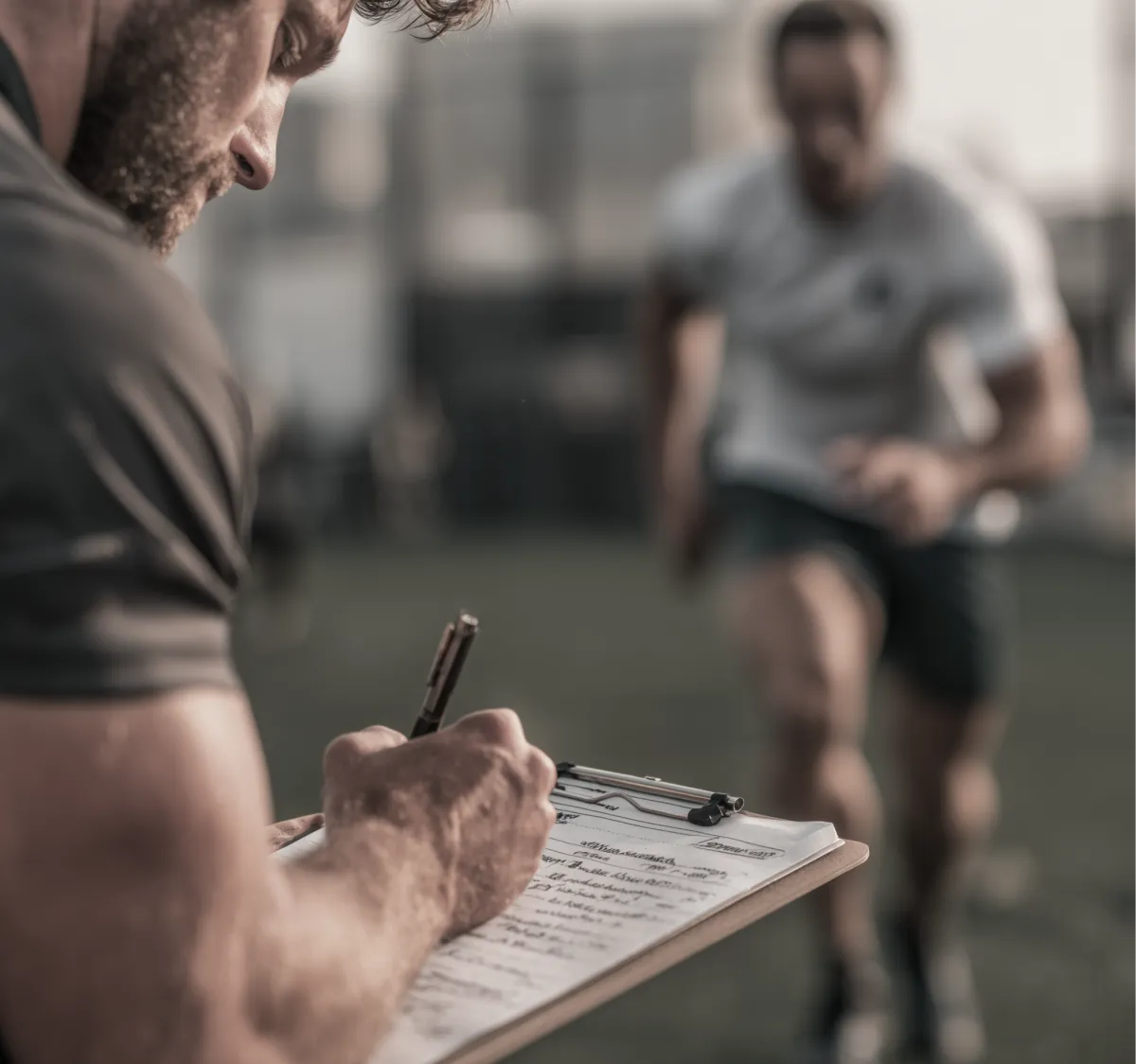
Visual observation and manual scoring made progress hard to track, assessments were inconsistent across therapists, and movement quality insights were limited. Return-to-play decisions relied on subjective judgment, lowering patient engagement and increasing (re)injury risk .
After Model Health

Model Health provides standardized, objective assessments with clear metrics for asymmetries, compensation patterns, and functional performance. Therapists can track progress, make confident return-to-play decisions, and engage patients with objective feedback, without disrupting clinical workflow.

Smartphone-based, markerless motion capture

Validated technology for 3D biomechanical analysis

Quantitative whole-body movement quality metrics

Session-to-session comparison and progress tracking
Hear it from our customers
1 / 5
What our clients say:

I used to do running analysis with 2D video and software that required me to mark joints at specific moments in the gait cycle to estimate angles. I really appreciate being able to collect and visualize full kinematics time series with the same 2D video and built-in analysis with Model Health. I'm developing a new running analysis program using Model Health and I'm confident that the ability to provide more comprehensive data will set me apart and allow me to provide much better results to the runners I work with
Jessica Hunter
PhD, Kinesiology, Running Certified Coach
Model Health has been a huge boost to our small private practice. We have been able to implement it mainly with 3D running gait analyses as well as incorporate it into our ACL return to sport testing workflows. The set-up is quick, data collection is seamless, and the data processing continues to get faster. The reports that it generates are accurate, consistent, and are high quality for kinematic data, with easy-to-understand visualizations for joint angles and key metrics.

Alex Peters
Sports Physical Therapist at Impulse PT

Using this system in my clinic has been a game change. It provides clear, actionable insights into movement patterns, helping me make more informed decisions for my patients' treatment plans. The accuracy and ease of use make it an invaluable tool for improving patient outcomes.
Dr. Wilfredo Agredo
Medical Doctor
It's been great to implement Model Health in our clinic. It challenges our thoughts and gives us a way to objectively look at movements for those with challenging lingering pain when strength, Range Of Motion, and structure are "healthy". Especially useful for those working with athletes where we are unable to "see" high speed movements

Vien Vu
High-Performance Sports Physical Therapist at Stanford Athletic

We’re excited to integrate this innovative motion analysis into our ACL pathway at the POSM Performance Lab. This technology allows us to quantify contact time, RSI, and knee and hip joint kinematics during the triple hop test, providing a more comprehensive assessment of capacity following ACL injury.
Nic Blackah
Physiotherapist at POSM Performance Lab
Start collecting movement data today
See how Model Health fits into your clinical, performance, or research workflow. Create your free account and start analyzing movement in minutes.