A Practitioner's Guide to 3D Movement Analysis
Movement analysis is easier to run than it used to be, and that raises a practical set of questions. What does each type of movement data actually tell you? Where does 3D capture add something that 2D cannot? And where looking at movement, joint by joint, have shown success?
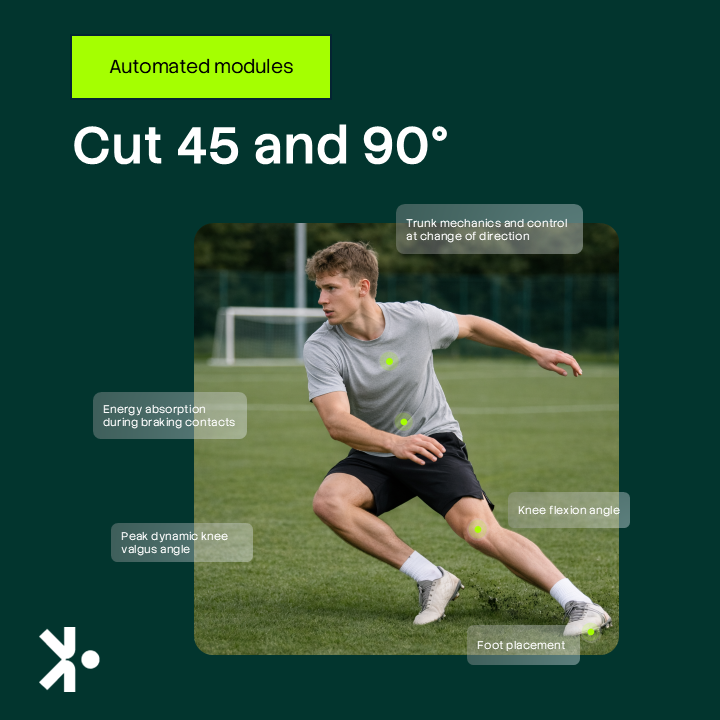
We put together a short guide for practitioners willing to bring movement analysis into everyday practice and willing to better understand its fundamentals. It works through the three categories of movement data, spatiotemporal, kinematics and kinetics, and what each one lets you assess. It covers how the field moved from 2D to 3D, how marker-based and markerless capture compare and what each is suited to, and where movement analysis sits alongside the other data you already collect.
We also looked at the evidence from the litteratur , drawing on prospective and retrospective studies across ACL injury, patellar tendinopathy and iliotibial band syndrome, as well as clinical populations including stroke, Parkinson's disease and cerebral palsy.
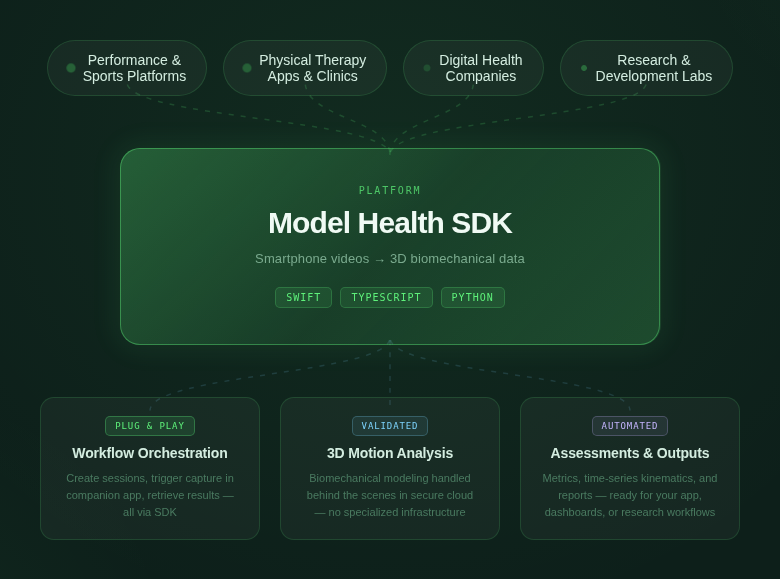
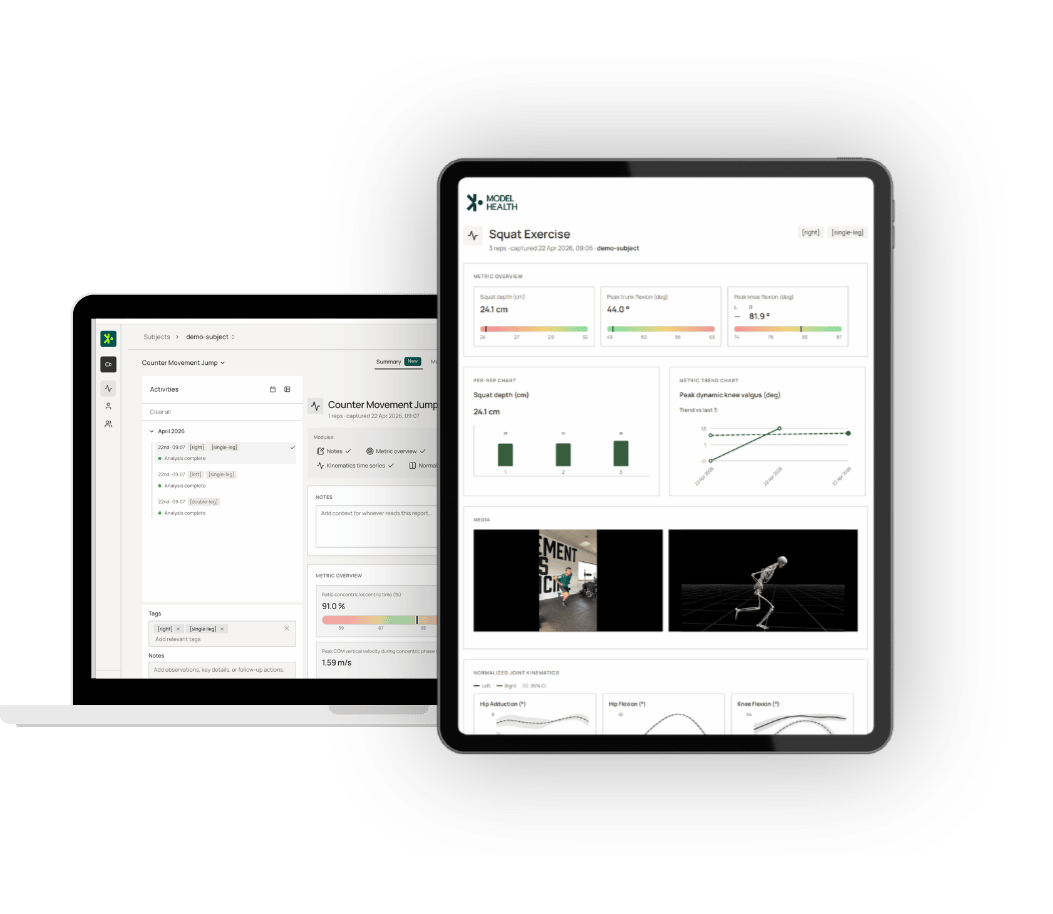
The closing chapters cover what Model Health captures and reports, its accuracy against marker-based systems, and the best practices that make movement data worth comparing over time.
This guide covers the fundamentals. If you’d like to dig deeper, we’d be happy to discuss.
Download link to our guide below.



).png)


.png)