This week we hosted Alex Peters, founder of Impulse Physical Therapy, Board Certified Sports Physical Therapist, Licensed Athletic Trainer and clinical assistant professor at D'Youville University, for a session on the mechanical drivers of hip and knee running injuries.
He used one real case to guide the session: a 30-year-old recreational runner with multi-year lateral knee pain, an MRI showing low-grade tearing of the distal IT band, and a history of marathons that had shrunk to one-mile runs. Several practitioners had looked at the knee, but few had looked closely at how he ran. What was keeping the tissue irritable?
What the session covered
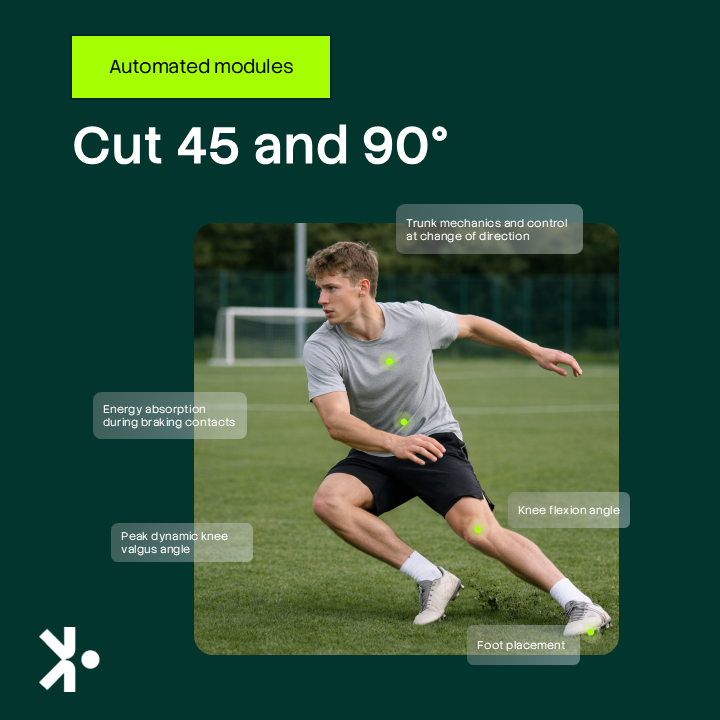
- Whether a phone camera can reliably assess running mechanics: what markerless 3D capture can and cannot tell you, and why it works best as a within-system tool, comparing limb to limb and stride to stride at matched speed.
- How to ensure comparable data collection: speed, incline, surface, footwear, warm-up, timing in the run, and a consistent camera setup, plus checking that the data matches what you see on the raw video.
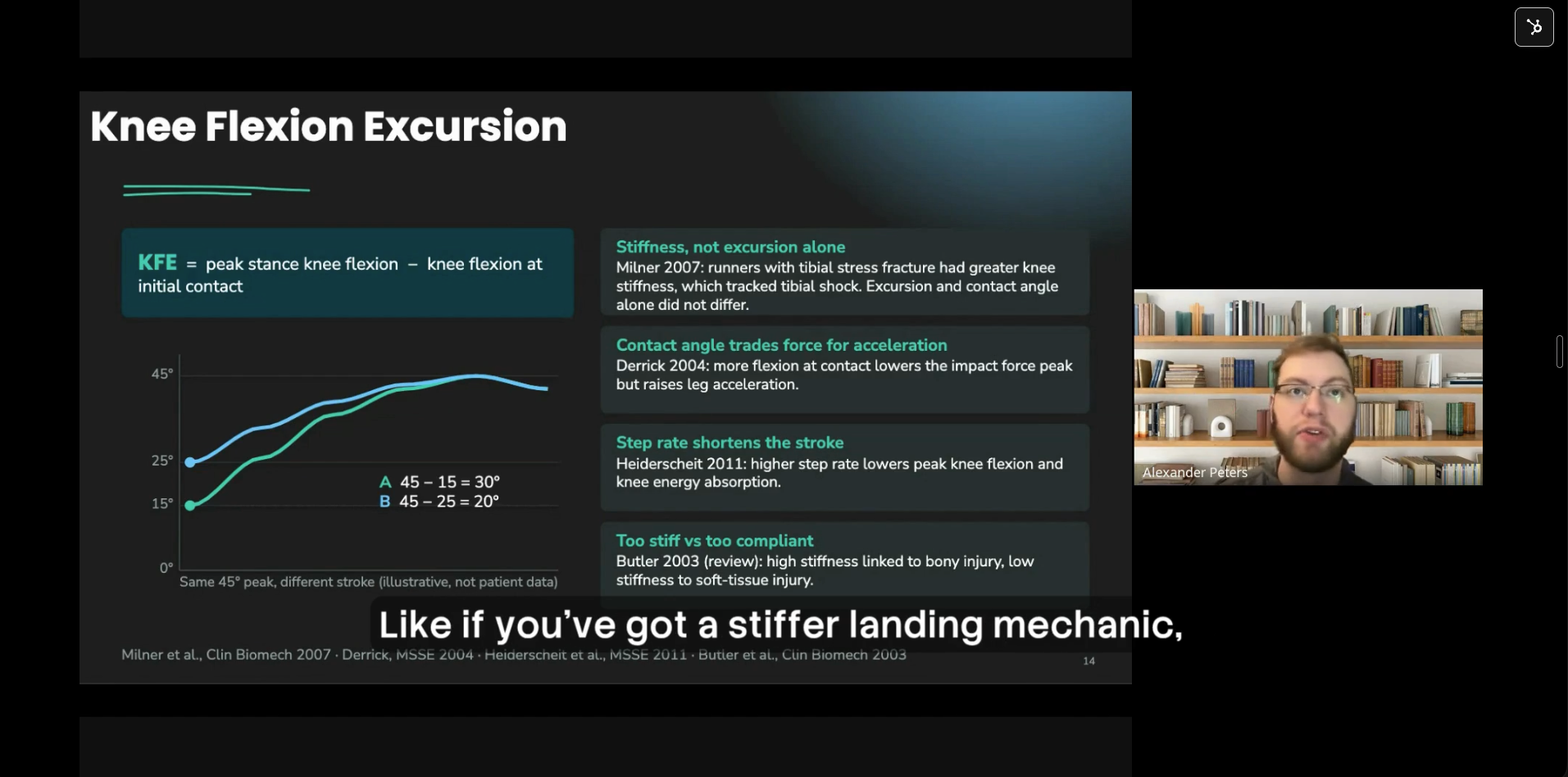
- What to look at with lateral knee pain: overstride, cadence and step length, and knee flexion excursion, with an read on what the literature does and does not support for each.
- A fresh look at the IT band: why compression of the fat pad beneath it may explain symptoms better than friction, and how tibial and hip internal rotation, step width, and strain rate fit in.
- How the case unfolded: the test findings, the running gait signature on the painful side, and how a PRP injection, strengthening, and gait work came together in rehab, followed by a recheck of his mechanics.
- Practical Q&A on when to use 3D capture in a clinic, what to do if a mechanical finding persists while symptoms resolve, and how the same approach applies to ACL and return-to-sport testing.
The throughline
Alex's central point is that 3D movement data sharpens your thinking without settling the question for you. Running mechanics can point to a pattern worth addressing, but the exam identifies the painful tissue, and symptoms matter more than any single metric. He was equally clear about what one case cannot prove: because the injection and the rehab happened together, there is no way to say which one drove the recovery. His advice is to define the patient’s function first, treat the tissue and the mechanics together, retest under matched conditions, and evaluate the outcome.
The full recording is available below.


).png)