Athletes accelerate, decelerate, turn, and react. Each of these qualities can be trained and tested, but they are not one and the same.
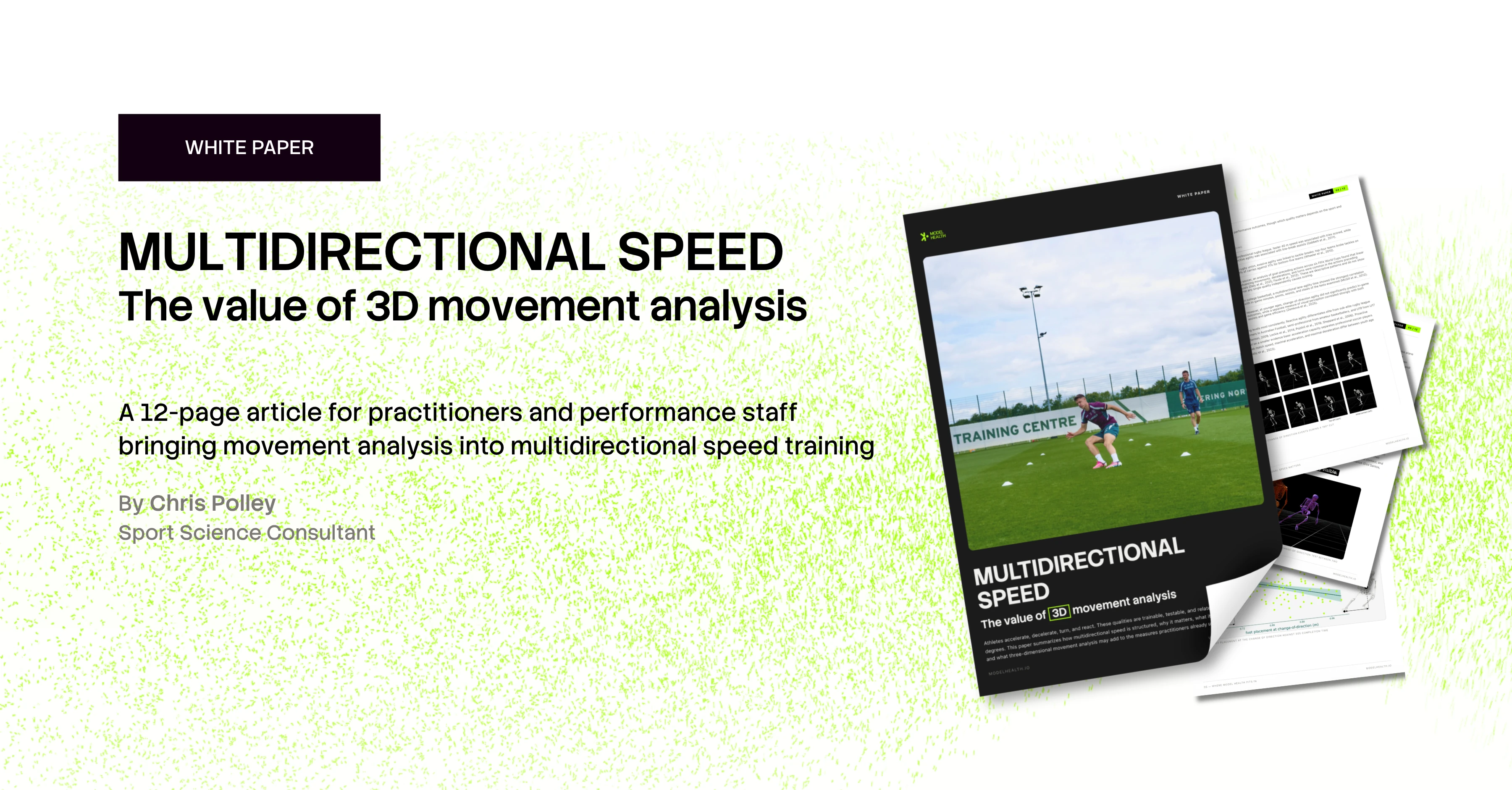
Our white paper provides a documented research background on Multidirectional speed and explains the importance of 3D movement analysis for accurately assessing and training its core qualities.
In a nutshell:
Separable qualities, separate tests
Multidirectional speed (MDS) has five components: linear speed, change-of-direction speed, curvilinear speed, contextual speed, and agility (McBurnie & Dos’Santos, 2022). They overlap less than is often assumed, so each needs its own testing and training.
Why it matters
• Premier League players perform the equivalent of around 726 turns per match (Bloomfield et al., 2007).
• In one Premier League team, 86% of sprints involved some degree of curvature (Caldbeck & Dos’Santos, 2022).
• Across six World Cups, sprints, decelerations, and turns were the actions that most often preceded goals (Daly et al., 2025).
What it demands
• Ground reaction forces in the first braking steps reach up to 2.7 times those of a maximal acceleration (Harper et al., 2022).
• Cutting without prior knowledge of direction increases frontal and transverse plane knee moments (Besier et al., 2001).
• In Spanish professional soccer, 52% of sprint-related hamstring injuries occurred on acurve (Gandarias-Madariaga et al., 2025).
What 3D analysis adds
A test time shows the outcome, not how it was produced. Athletes reach the same result through movement strategies with different joint loading (David et al., 2017), and much of that difference lies outside the plane a single camera sees.
Where Model Health fits in
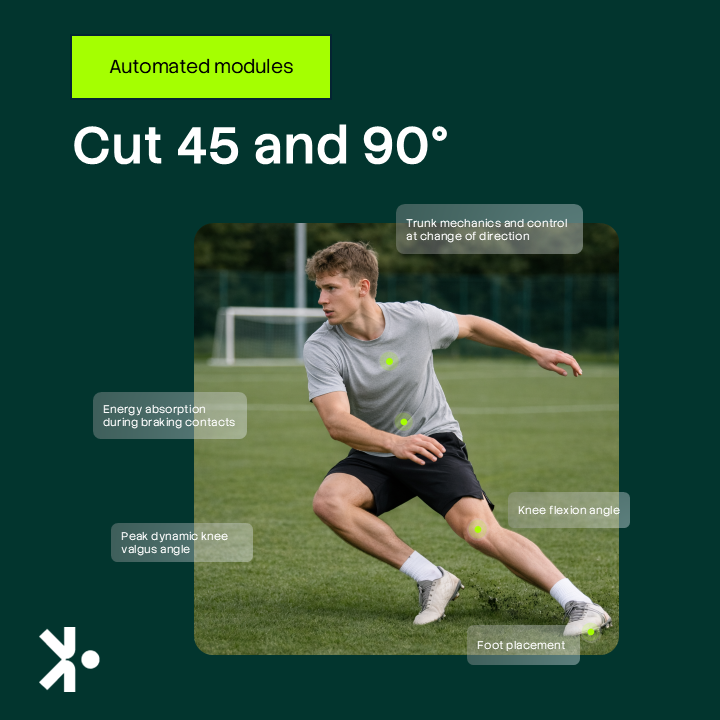
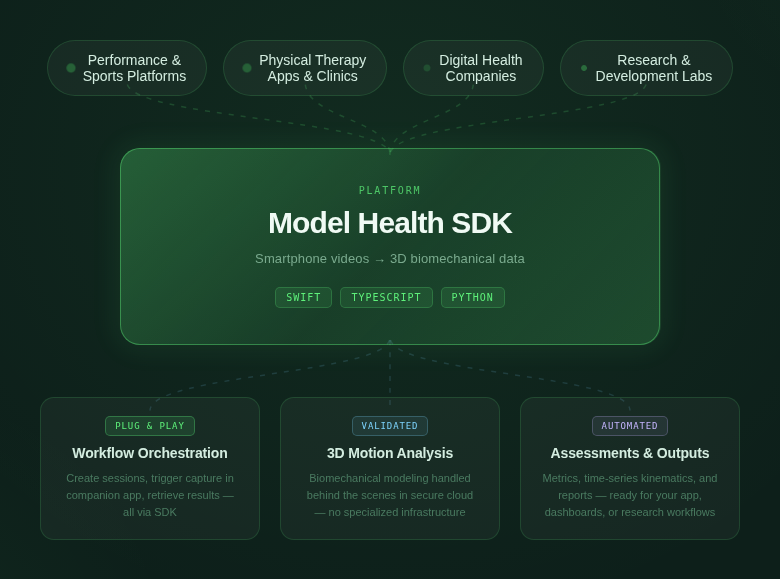
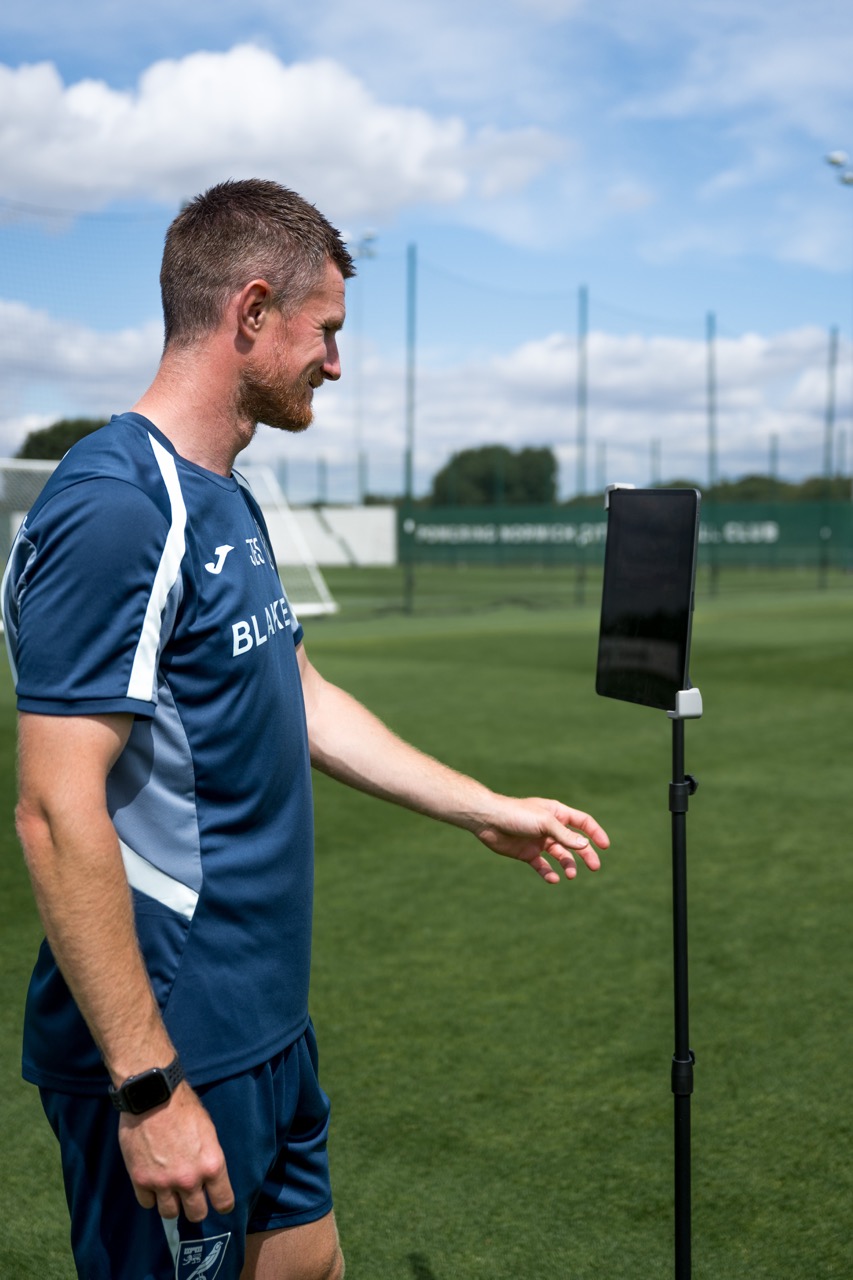
Model Health measures whole-body 3D movement with two smartphones, onthe field and without markers. Dedicated modules automate the analysis of sprinting, the 505 test, cutting, and deceleration, including automatic S-MAS scoring, so a whole squad can be screened in a single session.



).png)

.png)