Why force plates and motion capture can report different jump heights
Same jump, two heights
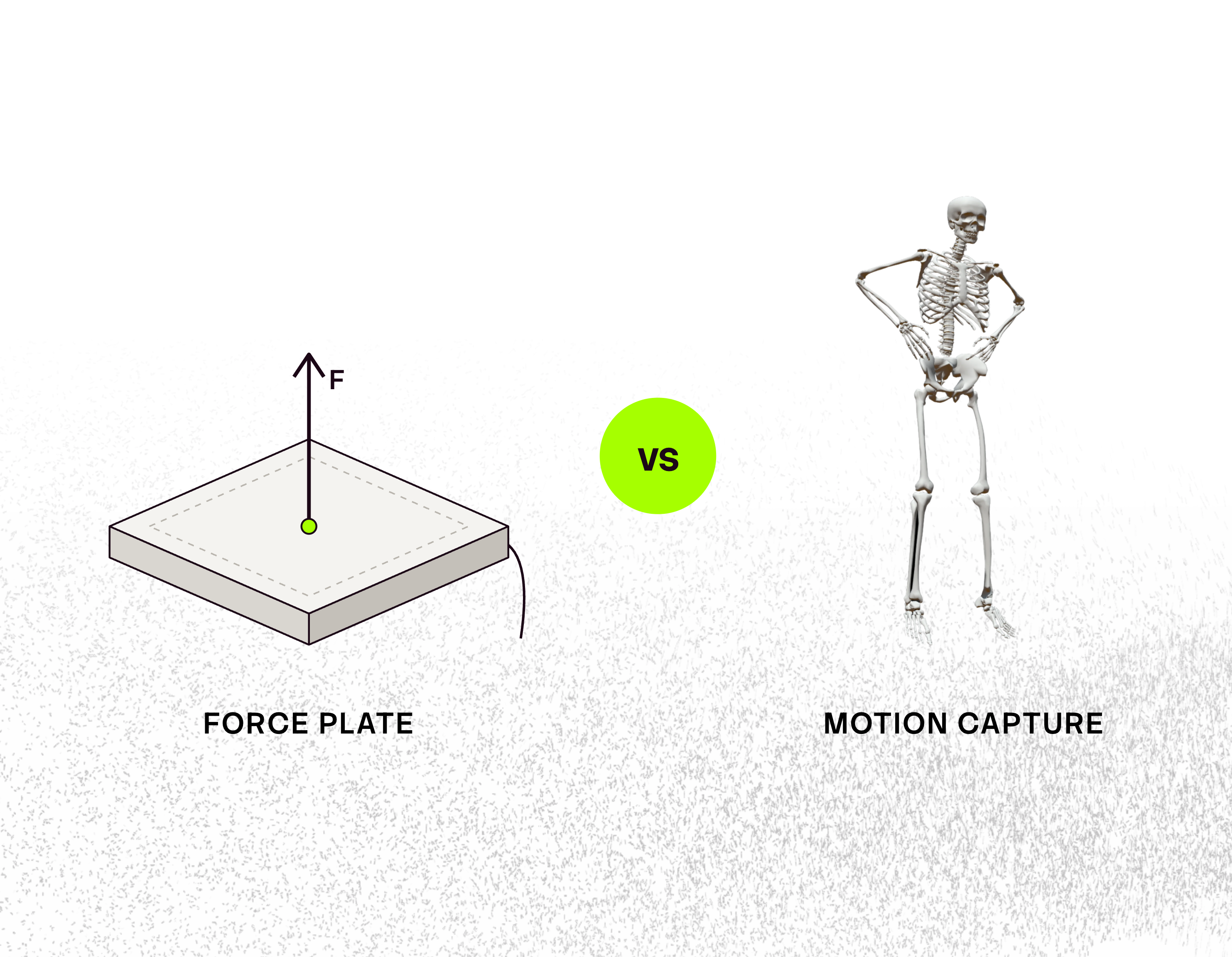
Record one jump with a force plate and a markerless motion capture system at the same time, and you can get two different jump heights. In our data the gap was close to 10 cm.
Neither system is wrong. Jump height is not independent of the method used to measure it. Each system answers a slightly different question, so the numbers only line up once both use the same definition.
Below we explain how each system defines jump height, what the difference means, and what happens when you compare them on equal terms.
How force plates define jump height
Force plates measure the force applied to the ground. They do not see the body move, so jump height is calculated from that force. Two methods are common:
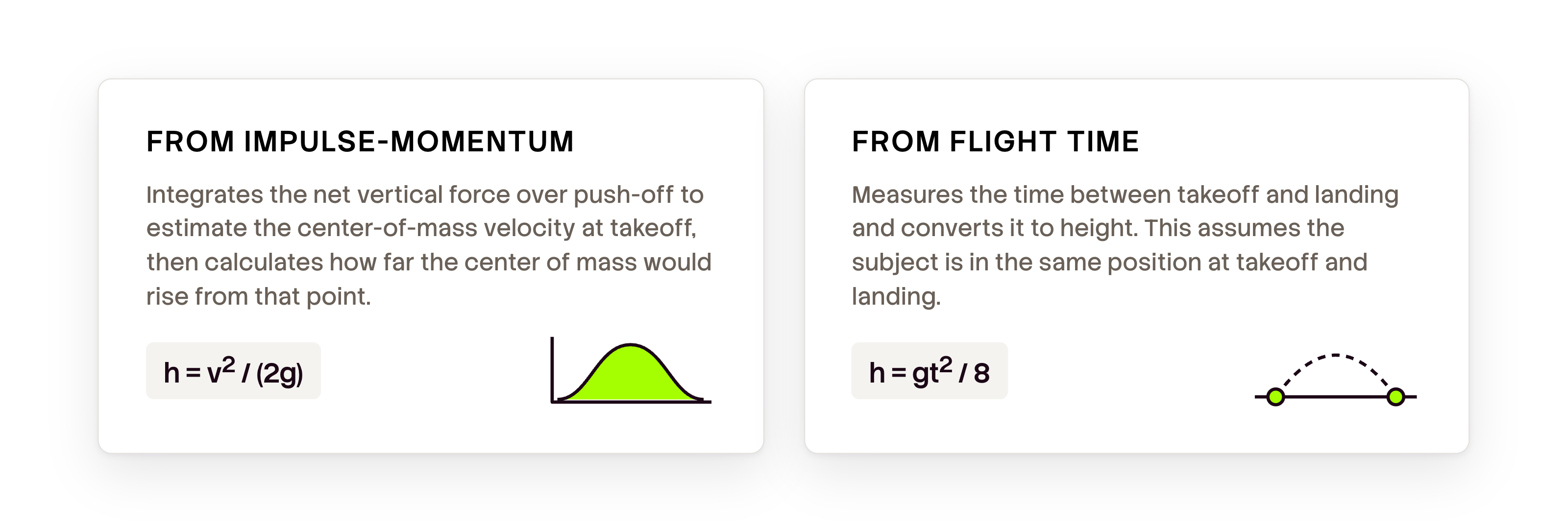
- Impulse-momentum: force over time gives the velocity at takeoff. Jump height is then v² / 2g.
- Flight time: the plate records how long the feet are off the ground. Jump height is then g × t² / 8.
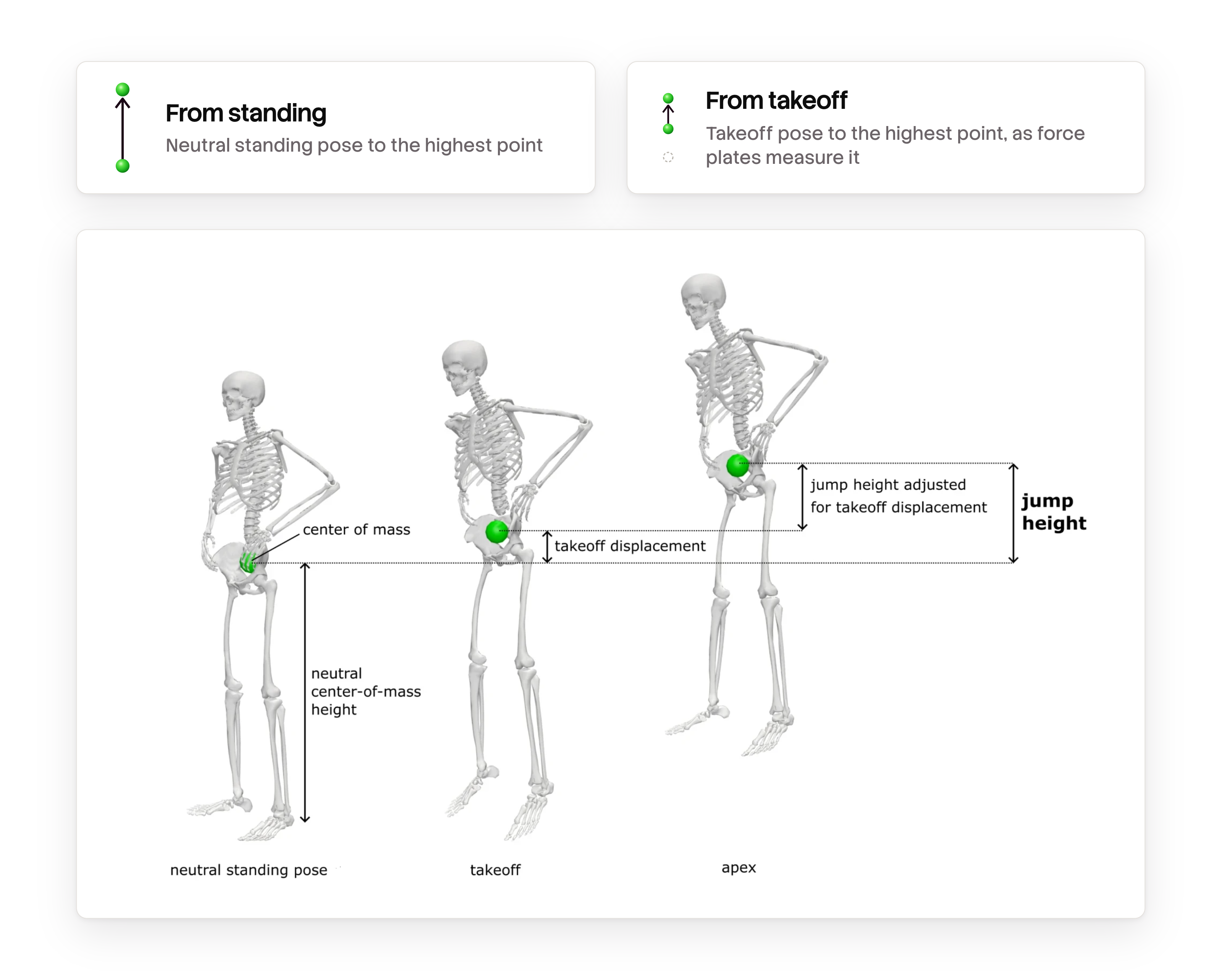
Both methods describe the airborne phase only: how high the body rises after the feet leave the ground. The rise before takeoff, as the hips, knees and ankles extend, is not included.
How markerless motion capture defines jump height
Markerless motion capture tracks the body from video. Instead of calculating height from force, it measures how far the body actually moves. Two choices shape the number:
- What is tracked: the whole-body center of mass, or a single landmark such as the pelvis.
- Where it is measured from: the standing position, or the moment of takeoff.
Measured from standing, jump height includes the rise during push-off, before the feet leave the ground. In our data that rise averaged 9.2 cm (SD 2.1). Measured from takeoff, it describes the airborne phase only, which is what force plates report.
What the data shows
We recorded 170 countermovement jumps from four participants with Model Health and force plates at the same time.
Different definitions. Measured from standing, Model Health reported jumps 9.7 cm higher than force-plate flight time. That gap is close to the 9.2 cm rise before takeoff, which force plates do not include.

Same definition. Measured from takeoff, the mean difference to flight time dropped to 0.5 cm, and the two were strongly correlated (R² = 0.985). Against impulse-momentum, the mean difference was 2.3 cm (R² = 0.97).

Same jumps, same systems. Most of the gap came from the definition, not from the measurement.
Before you compare two systems
- Check what each system measures. The airborne phase only, or the rise before takeoff as well.
- Check the reference point. Standing or takeoff, center of mass or a single landmark.
- Stay with one method over time. When tracking someone, keep the same system and the same definition.



).png)